

AI7 min read
How to evaluate an AI feature before you ship it, and after
A demo shows an AI feature on a good day. Here is a practical way to test it on real cases, agree what good looks like, and keep checking once it is live.
Read the articleAI
Most AI value in operations comes from a few well-chosen, well-measured automations. A four-step method to find the first one and prove it works, with a worked example.
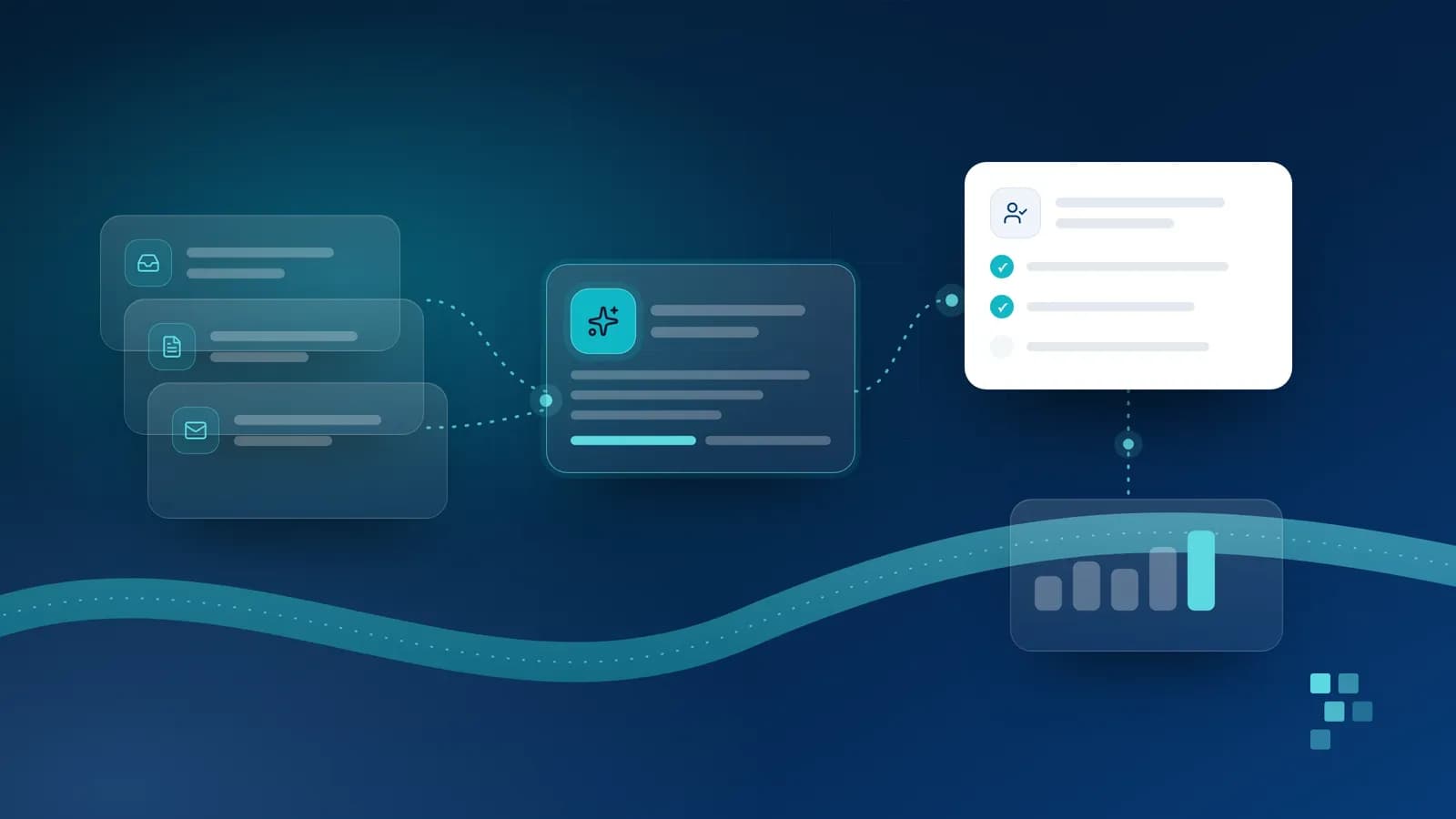
Most organisations have work that people re-key, sort or answer by hand every day. The best first AI project takes some of that work off them, and proves that it did. Pilots usually fail not because the technology does not work, but because the problem was poorly chosen, the measurement was vague and nobody owned the result. This article offers a practical way to pick that first automation and show that it works.
The best candidates are tasks that are repetitive, high-volume and currently done by people who would rather be doing something else: classifying incoming documents, extracting fields from forms, drafting routine replies, routing requests to the right team. These tasks have clear inputs and outputs, which makes them measurable.
Here is how the method might look for a finance team that types supplier invoices into its accounting system. The numbers are illustrative, not results from a real project.
If the prototype misses the target, the team has spent a few weeks and learned something specific. If it meets it, the same measurements become the case for rolling it out.
Send only the data each task needs, to services whose terms you have checked (see keeping your data private when you use AI). Be clear with staff and customers about where automation is used, log decisions for review, and keep a person accountable for the process. These are not obstacles; they are what makes a system trustworthy enough to be used.
One well-measured automation that saves real hours builds the confidence, data and skills for the next. A large transformation programme without that foundation rarely survives contact with reality. Pick the boring work, measure it, and let the results argue for the next step.
If you would like help choosing and proving a first automation, our AI solutions and automation service works through this method with you.
Related
A demo shows an AI feature on a good day. Here is a practical way to test it on real cases, agree what good looks like, and keep checking once it is live.
Read the article
Invoices, forms and records are often still re-keyed by hand. How document AI turns them into structured data, and how to make the results accurate enough to trust.
Read the article
What a large language model actually does, why its answers can be fluent and still wrong, and how to judge where it fits in your organisation's work.
Read the articleTell us about your project and we will come back with a clear next step.